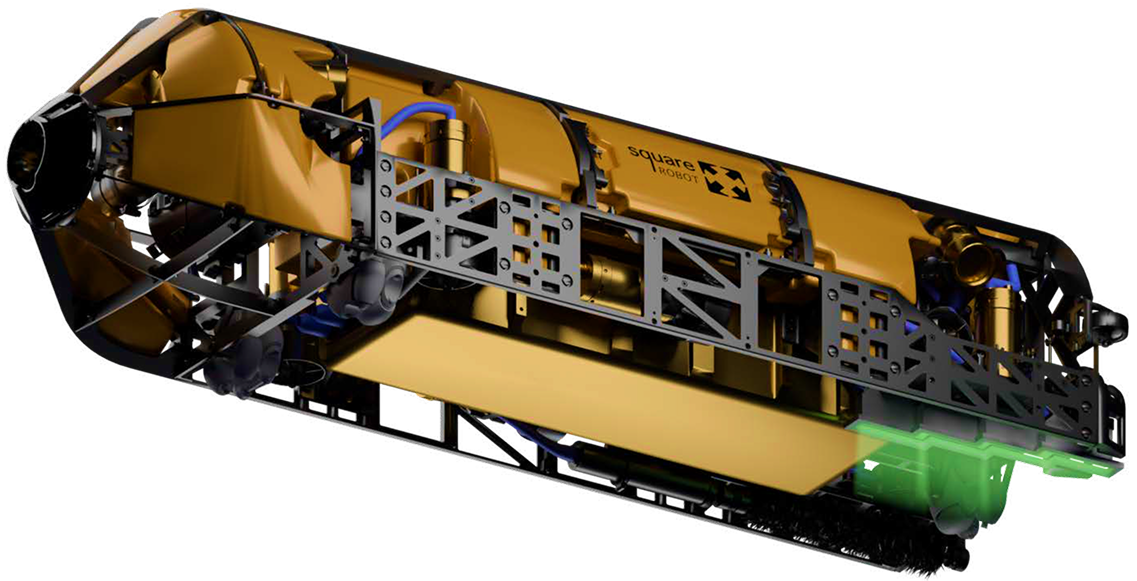
The SR-3
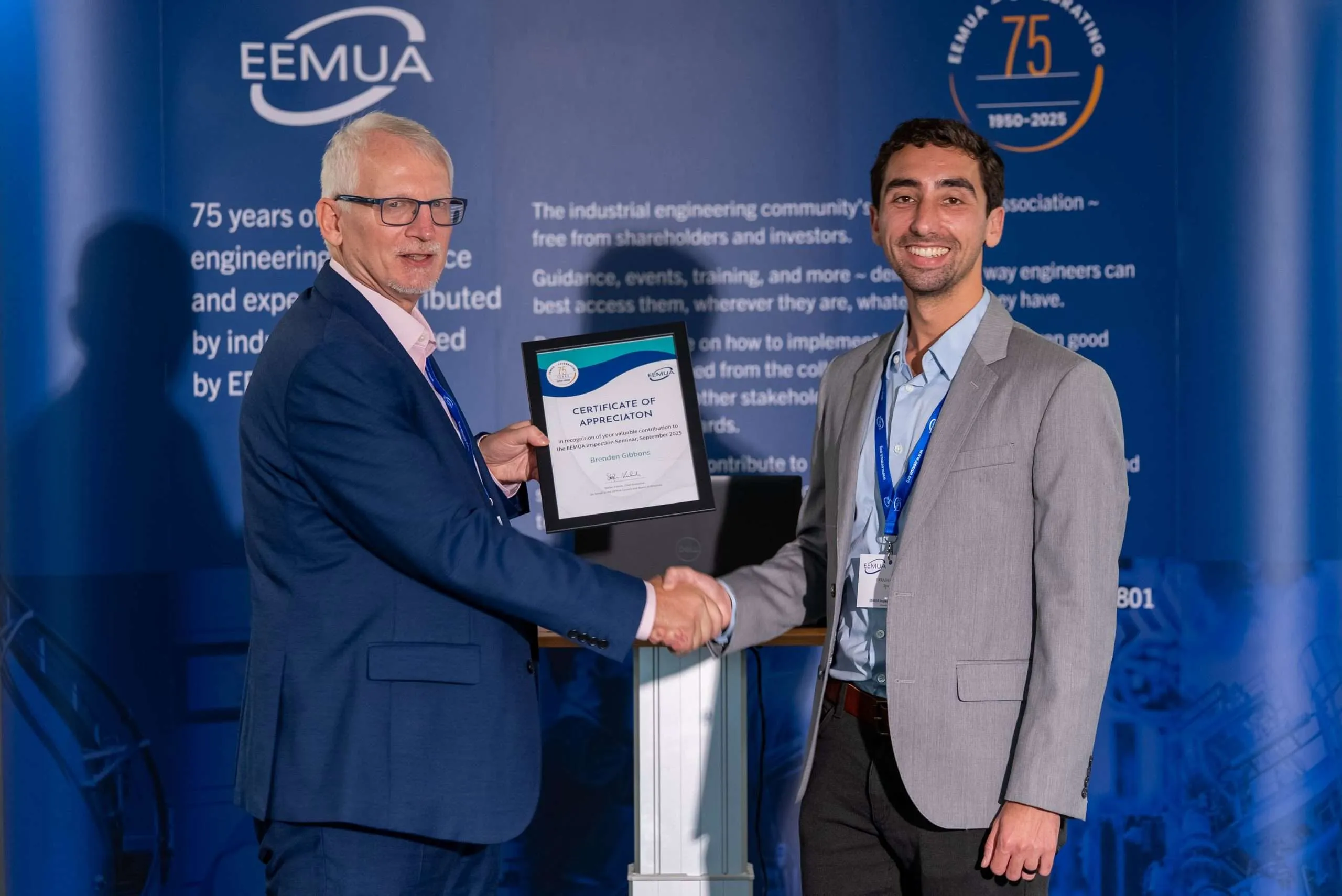
Boston, MA, October 17, 2025 – For Brenden Gibbons, VP of Software Engineering at Square Robot, robotics has always been about curiosity and problem solving. “By fifth grade, I knew I wanted to work on robots,” he says. From building LEGO Mindstorms as a kid to writing software for underwater vehicles early in his career, he has always been drawn to systems that think and act in the physical world. That lifelong focus on practical innovation would eventually lead him to Square Robot.
When the company was founded, Gibbons saw something rare: a team using autonomy for real industrial benefit, not just as a research project. “Our customers were our first investors,” he recalls. “They helped define what the robot needed to do. We weren’t forcing a product into the market; it was built from real demand.” He joined in 2016 as the company’s first full-time employee, helping to design and launch the SR-1 inspection robot while building the software team that became the foundation for Square Robot’s future growth.
From the start, Gibbons believed the key to building reliable robots was empathy. He describes his philosophy as “be the robot, be the tool, be the user.” “If you want to build reliable robots and tools for the real world, empathy is the most critical skill you can possess,” he says. “You need the ability to put yourself in the robot’s and the user’s shoes in difficult environments and be able to predict how things will play out.”
He lived that philosophy for the first several years of Square Robot’s life, personally operating robots for all jobs and test events. “Operating our robots was an incredible opportunity for me,” he explains. “It highlighted the environmental difficulties for our robots and our field personnel, but it also let me be the software department’s customer during a long period of development. That allowed blazing-fast software progress. When you’re your own customer, you know exactly what to build and how to prioritize things.” Those years in the field shaped how he leads today. The experience became part of the company’s culture, driving the design of Square Robot’s training programs, operating procedures, and software systems.
A major milestone came with the company’s first inspection in diesel. “Until that point, we didn’t know how the sensors would perform outside of water,” Gibbons says. “That inspection validated years of work and testing.” There were tougher lessons, too. “It was the most stressful four hours of my life,” he recalls of a job where a robot’s tether became temporarily caught on a mixer blade. “But we learned from it, and those lessons shaped how we operate today.” Over time, the company shifted from what Gibbons calls “the Wild West” of rapid iteration to a validation-first organization built on careful testing and field training.
Today, Gibbons leads efforts focused on data and software. “We collect as much data as possible so we can use it for future predictive purposes,” he says. “There have already been instances of tank health analysis that we didn’t specifically target but were able to perform because of how rich and varied our data is. I suspect that will continue to happen.” He also highlights Atlas, Square Robot’s digital reporting platform, which is changing how customers interact with their inspection data and how quickly they can act on insights.
Asked what advice he would give to future technical leaders, Gibbons smiles. “Really understand your product and your customer. Be your own user.” Then he adds, “It sounds unconventional, but I think empathy is the ultimate engineering skill. If you can really embody the systems you’re working on and their users, you’ll never waste effort on things that aren’t important. You’ll reduce the iteration cycle because you’ll do things right the first time around.”